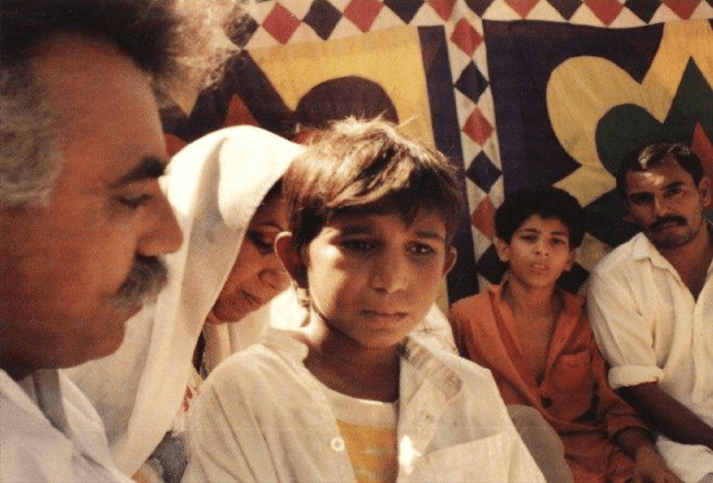
Biography of a young advocate who spoke out against child labor
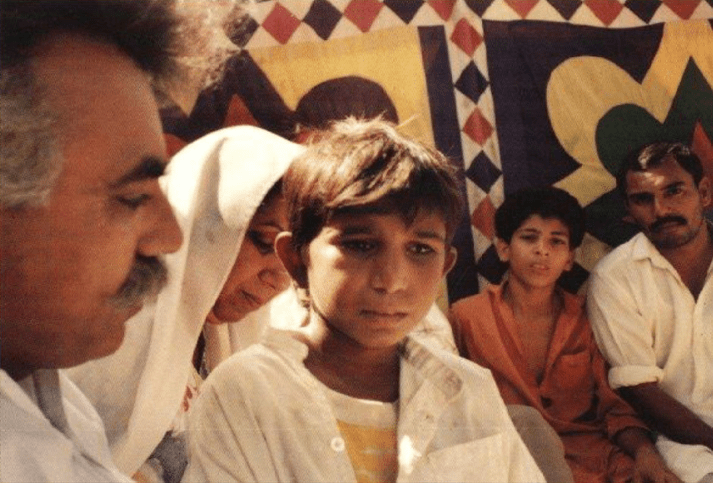
Iqbal Masih was born on January 1, 1983 in Muridke, a small village in Punjab, Pakistan. Iqbal was raised by his mother, Inayat Bibi, along with his four siblings. When Iqbal was four years old, his family was unable to afford certain family expenses, so they took out a loan from a local carpet factory owner. In exchange for the loan, Iqbal was forced to work in the factory for 12 hours a day, 7 days a week, for no pay. Many people in the world call Iqbal’s debt bondage as slavery.
Iqbal worked in the factory for five years, during which time he was beaten and abused by the factory owner. In 1992, when he was nine years old, he escaped from the factory and ran away home. Despite his return home, his mother knew that he was still in danger from the factory owner. Iqbal was interested in how he could help other children like himself, and he sought the help of organizations like the Bonded Labor Liberation Fund (BLLF), and the Brick Layer Union. People connected to these organizations helped Iqbal and other children escape from the carpet factory owner’s debt loans.
After Iqbal was freed, he decided to use his experience to help other child laborers. He joined the BLLF and began speaking out against child labor and debt bondage. He traveled all over Pakistan and the world, giving speeches and meeting with government officials and business leaders. He also wrote a book about his experiences, called “I Am Iqbal.”
Iqbal’s work against modern slavery made him a target of the people who profited from child labor. In 1995, when he was just 12 years old, he was shot and killed by two men believed to be connected to the carpet factory owner.
Iqbal Masih is remembered as a brave and inspiring young man who fought for the rights of child laborers all over the world. He is a symbol of hope for children who are still trapped in the cycle of debt bondage, and his tragic death helped to raise global awareness about the issue of child labor. His legacy continues to inspire people today to work for a world where all children can enjoy their childhood and have the opportunity to reach their full potential.
In 1994, Iqbal Masih was awarded the Reebok Human Rights Award for his work against child labor. In 2000, he was posthumously awarded the World’s Children’s Prize for the Rights of the Child. The 2014 Nobel Peace Prize was awarded to children’s rights advocate Kailash Satyarthi based on his work for the prevention of child labor and the promotion of female education. Satyarthi mentioned Iqbal in his Nobel Peace Prize award speech, dedicating it to him and other martyrs.
Image of Iqbal Masih is public domain. Text copyright Cary Benbow [CC BY-SA 4.0]
[It is often difficult to locate and secure content for the educational publishing market which is fair and balanced, and free of copyright restriction. Please feel free to use this content of hard-to-find examples and credit when appropriate.]
 Cary Benbow
